Quick answer: Morocco weather changes more by region than by season. The coast stays mild all year (18-27 °C), the imperial cities are hot in summer and cool in winter, the Sahara is pleasant from October to April but very hot in summer, and the High Atlas gets snow from December to March. For a full tour, therefore, March to May and late September to November are the most comfortable months.
Summary in 30 seconds
- Morocco has four climate zones: Atlantic coast, Mediterranean north, interior plains and Atlas, and the pre-Saharan south.
- Marrakech averages about 19 °C in January and 37 °C in July and August.
- Merzouga reaches about 40 °C in July, but desert nights in December and January can drop close to freezing.
- Essaouira and Agadir rarely pass 27 °C, thanks to the Atlantic and the trade winds.
- Most rain falls from November to March, mainly in the north (Tangier, Chefchaouen, Fes).
- The High Atlas holds snow from roughly December to March; Oukaimeden runs ski lifts in a good winter.
- Since 20 September 2026, Morocco stays on GMT all year, so sunsets are about one hour earlier than older guides say.
- The most comfortable months for a classic city-mountain-desert loop: March, April, May, October and November.
Key facts at a glance
| Question | Short answer |
|---|---|
| What is the weather like in Morocco? | Mediterranean in the north and on the coast, semi-arid inland, desert in the south. |
| Hottest month | July or August (Marrakech about 37 °C, Merzouga about 40-43 °C). |
| Coldest month | January (Marrakech nights about 7 °C, Atlas nights below 0 °C). |
| Rainiest months | November to February, mostly in the north. |
| Driest months | June to August almost everywhere. |
| Best months for touring | March to May and late September to November. |
| Best months for the Sahara | October to April. |
| Best months for beaches | June to September. |
| Sea temperature | About 17-18 °C in winter and 21-23 °C in late summer on the Atlantic. |
| Time zone | GMT all year since 20 September 2026. |
Why Morocco weather is so different from region to region
At first, many travellers imagine Morocco as one hot, dry country. In reality, the weather in Morocco is shaped by three big forces: the Atlantic Ocean, the Atlas Mountains and the Sahara. As a result, you can have a cool, misty morning in Essaouira, a warm afternoon in Marrakech and a frosty night in the High Atlas on the same day.
First, the Atlantic cools the whole western coast. A cold ocean current runs along the shore, so even in August cities like Essaouira, El Jadida and Agadir stay pleasant. In fact, the coast is often 10-15 °C cooler than Marrakech, only three hours inland.
Second, the Atlas Mountains act as a wall. Moreover, they catch the rain that comes from the Atlantic in winter, which is why the north side of the mountains is green and the south side is dry. Behind them, then, the land falls towards the pre-Sahara: the Draa Valley, the Ziz Valley, Ouarzazate, Zagora and Merzouga.
Finally, the Sahara brings heat and clear skies. In addition, it sends a hot, dry wind called the chergui (or sirocco) towards the interior in summer. As a result, when it blows, temperatures in Marrakech and Fes can jump above 40 °C for a few days.
The four climate zones of Morocco
| Zone | Main places | Summer | Winter | Rain |
|---|---|---|---|---|
| Atlantic coast | Casablanca, Rabat, Essaouira, Agadir | Warm, breezy, 23-27 °C | Mild, 17-21 °C by day | Light, mostly winter |
| Mediterranean north and Rif | Tangier, Tetouan, Chefchaouen, Al Hoceima | Hot and sunny, 28-32 °C | Cool and wet, 14-17 °C by day | Highest in the country |
| Interior plains and Atlas | Marrakech, Fes, Meknes, Imlil, Ifrane | Very hot in cities, 33-37 °C | Cool days, cold nights, snow on peaks | Moderate, winter and spring |
| Pre-Saharan south | Ouarzazate, Draa Valley, Zagora, Merzouga | Very hot, 38-43 °C | Sunny days, cold nights near 0-4 °C | Very low, rare storms |
Morocco weather by month: average temperatures and climate data
First, the table below shows approximate long-term averages for the main places on a Morocco tour. In other words, they are rounded values from climate records and are a planning guide, not a forecast. Always check the forecast a week before you travel, because a single heatwave or storm can change the picture.
Morocco weather table: highs and lows by city
| Month | Marrakech | Fes | Merzouga | Essaouira | Tangier |
|---|---|---|---|---|---|
| January | 19 / 7 °C | 16 / 5 °C | 18 / 3 °C | 18 / 10 °C | 16 / 9 °C |
| February | 21 / 8 °C | 17 / 6 °C | 21 / 5 °C | 19 / 11 °C | 17 / 9 °C |
| March | 23 / 11 °C | 20 / 8 °C | 25 / 9 °C | 20 / 12 °C | 18 / 10 °C |
| April | 25 / 13 °C | 22 / 9 °C | 29 / 13 °C | 20 / 13 °C | 19 / 11 °C |
| May | 28 / 15 °C | 26 / 12 °C | 33 / 17 °C | 21 / 15 °C | 22 / 13 °C |
| June | 33 / 18 °C | 31 / 15 °C | 39 / 22 °C | 22 / 16 °C | 25 / 16 °C |
| July | 37 / 21 °C | 35 / 18 °C | 43 / 26 °C | 23 / 17 °C | 28 / 19 °C |
| August | 37 / 21 °C | 35 / 19 °C | 41 / 25 °C | 23 / 17 °C | 29 / 19 °C |
| September | 32 / 19 °C | 31 / 17 °C | 35 / 20 °C | 23 / 17 °C | 27 / 18 °C |
| October | 28 / 16 °C | 26 / 13 °C | 28 / 14 °C | 23 / 15 °C | 23 / 15 °C |
| November | 23 / 11 °C | 20 / 9 °C | 23 / 8 °C | 21 / 13 °C | 19 / 12 °C |
| December | 19 / 8 °C | 17 / 6 °C | 18 / 4 °C | 19 / 11 °C | 17 / 10 °C |
Values show the average daytime high / night-time low, so read them as a typical range. For example, Marrakech figures follow WeatherSpark long-term averages; other cities are rounded from regional climate data.
Morocco weather month by month: what each month feels like
However, numbers only tell half the story. Next, we explain how the Morocco weather actually feels on the ground, month by month, and which of our tours suits each period best.
Morocco weather in January
January is the coldest month. In Marrakech, days are sunny and around 18-20 °C, yet nights fall to 5-7 °C, and unheated riad rooms can feel cold. In the desert, the days are bright and comfortable, but nights at camp can drop to 0-3 °C, so good camps add blankets and heaters. Meanwhile, the High Atlas is often white with snow. Overall, it is a quiet, good-value month for travellers who pack layers.
Morocco weather in February
February is similar to January, although the days are slightly longer. In addition, almond trees bloom in the Atlas valleys and around Tafraoute from late January to February. However, rain is still possible in the north. In 2027, Ramadan is expected to begin around 8 February, so check the dates if you plan to travel in the second half of the month.
Morocco weather in March
After winter, March is the start of spring and one of the best months for touring. Marrakech reaches 22-24 °C, the countryside is green and snow still caps the Atlas peaks, which makes for spectacular photos. On the other hand, the desert can see windy days and short sandstorms in March and April. Also, Ramadan 2027 is expected to end with Eid al-Fitr around 9-10 March.
Morocco weather in April
In fact, April is near perfect almost everywhere. Days are warm, nights are mild and, above all, the light is soft. As a result, it is one of the busiest months, especially around Easter, when European visitors arrive. Therefore, book riads and desert camps early if you travel at this time.
Morocco weather in May
May brings the first real heat inland, with Marrakech near 28 °C and Merzouga above 30 °C. Still, mornings and evenings are lovely. In the Dades Valley, the rose harvest takes place and Kelaat M’Gouna usually holds its Rose Festival in May. It is also a great month for the mountains and the gorges.
Morocco weather in June
June is hot inland but pleasant on the coast. Marrakech climbs to 33 °C, while Essaouira stays at about 22 °C with strong afternoon wind. Meanwhile, Essaouira usually hosts the Gnaoua World Music Festival in June. For the Sahara, therefore, plan sunset and sunrise camel rides and rest during the middle of the day.
Morocco weather in July
July is the hottest month. For example, Marrakech averages about 37 °C and can pass 42 °C when the chergui blows. Merzouga can reach 45 °C. In short, July is a coast and mountain month: Essaouira, Agadir, the Mediterranean beaches and Imlil are all comfortable. Desert tours still run, but they should be short and planned around the heat.
Morocco weather in August
Similarly, August is as hot as July inland. In August 2023, Agadir set Morocco’s national record of 50.4 °C during an exceptional chergui episode, a reminder that heatwaves can hit even the coast. Most of the time, however, the Atlantic towns stay at 23-27 °C. August is also the main holiday month for Moroccan families and the diaspora, so beaches and coastal hotels are busy and prices rise.
Morocco weather in September
September is a transition month. The first half is still hot inland; the second half is warmer than spring but more comfortable. In addition, occasional thunderstorms can hit the Atlas and the south. In September 2024, for example, exceptional rains flooded parts of the Sahara near Tagounite and refilled Lake Iriqui, which had been dry for decades. Further east, in the High Atlas, the Imilchil marriage festival usually takes place in late summer.
Morocco weather in October
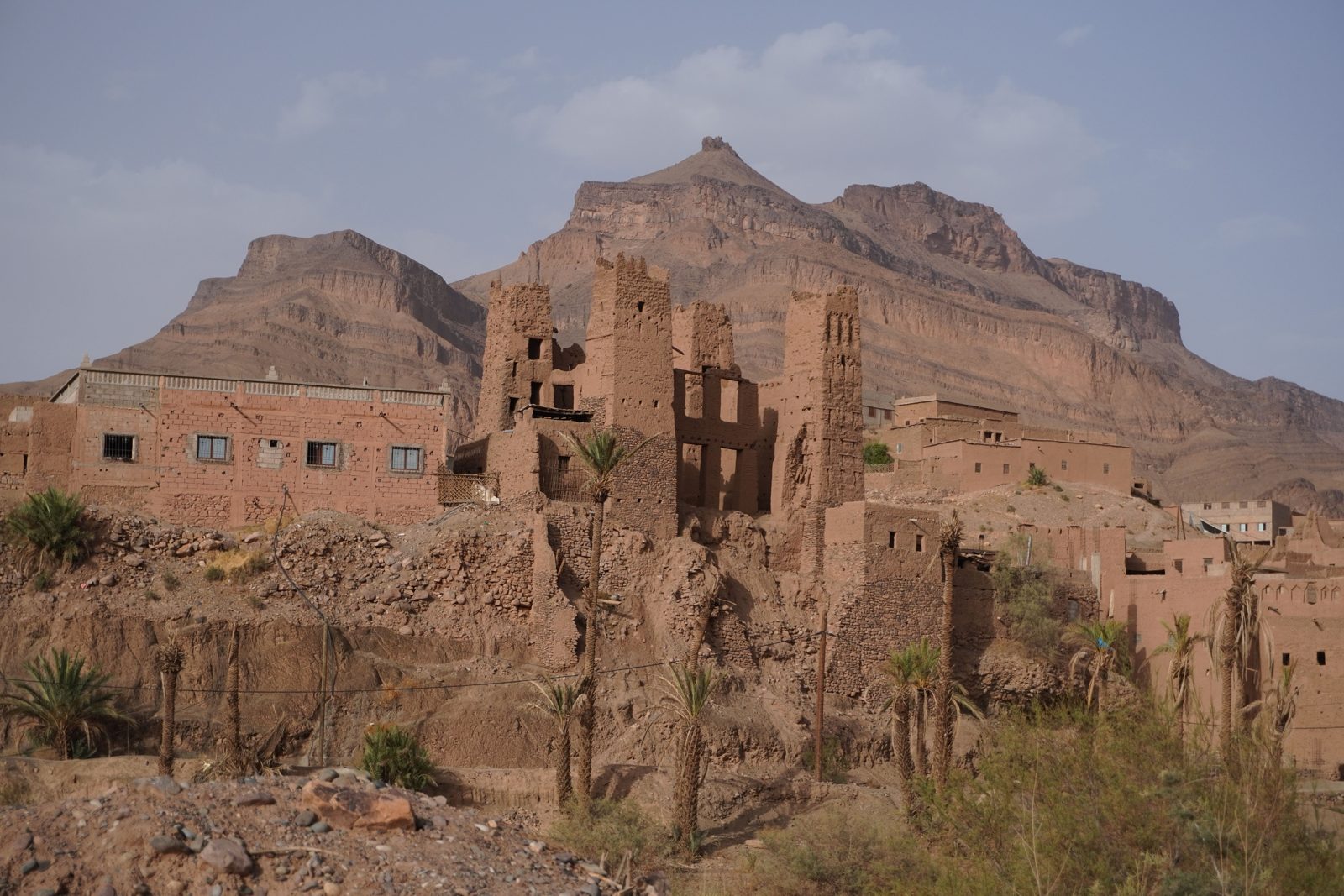
Above all, October is one of our favourite months for the Morocco weather. Marrakech drops to about 28 °C, the desert returns to comfortable days (25-30 °C) and the sea is still warm. Moreover, the date harvest begins in the Draa and Ziz valleys, like the one in our photo above. As a result, this is the start of the high season for desert tours.
Morocco weather in November
November is mild and sunny in the south and in Marrakech (about 23 °C), but it is also the start of the rainy season in the north. In Marrakech, however, November is statistically the rainiest month, with about 36 mm of rain on average. Even so, rain usually comes in short spells rather than full grey weeks. Meanwhile, desert nights become cool, around 8 °C.
Morocco weather in December
Finally, December brings short, bright days and cold nights. Marrakech is around 19 °C by day and 8 °C at night, and the desert is crisp and clear, which is ideal for stargazing. The Christmas and New Year period is very popular, so book early. For ideas, see our December holiday guide.
Morocco weather by month: the quick verdict
In short, if you only have a minute, this list sums up the Morocco weather by month for a classic tour of cities, mountains and desert.
- January: good. Sunny and cool, cold nights, snow in the Atlas, few crowds.
- February: good. Almond blossom, cool nights, possible rain in the north.
- March: excellent. Green landscapes, snowy peaks, some wind in the desert.
- April: excellent. Warm days everywhere; busy around Easter.
- May: very good. Rose season in the Dades Valley; first heat inland.
- June: fair. Hot inland, ideal on the coast and in the Atlas.
- July: coast and mountains only. Inland heat often above 40 °C.
- August: coast and mountains only. Busy beaches, hot cities.
- September: good from mid-month. Warm sea, cooling desert.
- October: excellent. Comfortable everywhere, date harvest in the oases.
- November: very good. Mild south, first rains in the north.
- December: good. Bright days, cold nights, festive atmosphere.
Rain in Morocco: when and where it falls
In general, rain in Morocco is concentrated in a few months and a few regions. Overall, the north and the Atlas receive most of it, while the south can go months without a drop.
- Wettest region: the Rif and the north. Chefchaouen and Tetouan are among the wettest towns in the country, with heavy rain from November to February.
- Moderate: Fes, Meknes, Rabat and Casablanca, with most rain from November to March.
- Low: Marrakech, with roughly 250 mm per year, mainly from November to April.
- Very low: Ouarzazate, the Draa Valley, Zagora and Merzouga. Rain is rare, but when it comes it can be violent and cause flash floods in the river beds (oueds).
In practice, a rainy day in winter rarely ruins a trip. In fact, after rain the Atlas looks its best, the air is clear and the snow line comes down. Just avoid crossing high passes such as Tizi n’Tichka during a snowstorm, and let your driver decide on the safest timing.
Morocco climate in the Sahara Desert
The Sahara, however, has its own rules. First, the air is dry, so 35 °C in Merzouga feels easier than 35 °C in a humid city. Second, the temperature range between day and night is huge: 20 °C of difference is common in winter.
| Season | Day in Merzouga | Night at camp | What to expect |
|---|---|---|---|
| Winter (Dec-Feb) | 17-21 °C | 0-5 °C | Clear skies, cold nights, few flies, superb stars |
| Spring (Mar-May) | 25-33 °C | 9-17 °C | Warm days, some wind and sand, best all-round season |
| Summer (Jun-Aug) | 39-45 °C | 22-26 °C | Very hot, camel rides only at sunrise and sunset |
| Autumn (Sep-Nov) | 23-35 °C | 8-20 °C | Warm, calm, date harvest in the oases |
For most travellers, therefore, the best months for the desert are October, November, March and April. Moreover, winter is excellent if you like crisp air and do not mind a cold night under heavy blankets. To compare the two great dune seas, read Erg Chebbi vs Erg Chigaga, and for everything else see our Sahara Desert Morocco guide.
The Draa Valley and the road of the kasbahs
From Ouarzazate, the road to Zagora then follows the Draa Valley, a long ribbon of palm groves, ksour (fortified villages) and adobe kasbahs between dry mountains. In fact, the photo at the top of this article was taken here. As a result, the Draa Valley weather is very close to the desert: hot summers, mild sunny winters and almost no rain. Therefore, the best time to drive it is from October to April, when you can walk through the palm groves and old ksour without the summer heat.
Morocco weather in the Atlas Mountains
By contrast, the High Atlas is where the Morocco weather surprises visitors most. For example, Imlil sits at about 1,740 metres and Jbel Toubkal, North Africa’s highest peak, reaches 4,167 metres. Every 100 metres of altitude removes roughly 0.6 °C, so it is always much cooler than Marrakech.
- Winter (December-March): snow on the peaks, frost in the villages, and the Toubkal ascent becomes a winter climb that needs crampons and an ice axe.
- Spring (April-June): the best trekking season, with green terraces and snow on the summits.
- Summer (July-August): a cool escape from the heat, about 25-28 °C by day in Imlil.
- Autumn (September-November): stable weather, clear views and walnut and apple harvests.
The Tizi n’Tichka pass (about 2,260 m) on the road between Marrakech and Ouarzazate can close for a few hours after heavy snow. That is why our drivers check the road every morning in winter. For more detail, read our Atlas Mountains Morocco guide.
Weather on the coast: Essaouira, Agadir and the north
Overall, the Atlantic coast has the most stable weather in Morocco. Agadir is famous for more than 300 days of sunshine a year, and Essaouira, the “Wind City of Africa”, rarely goes above 25 °C even in July. However, summer brings strong trade winds (the alizé) to Essaouira and Dakhla, which is great for kitesurfing but less ideal for lying on the sand.
By contrast, the Mediterranean coast, from Tangier to Saïdia, is warmer and calmer in summer, with sea temperatures around 23-24 °C in August. In winter, by contrast, it is the coolest and wettest part of the country.
| Place | Best beach months | Sea temperature (Aug) | Notes |
|---|---|---|---|
| Agadir | May to October | About 21-22 °C | Sunny almost all year |
| Essaouira | June to September | About 20-21 °C | Windy in summer, perfect for kitesurf |
| Asilah and Tangier | June to September | About 21-22 °C | Mild, green, rainy winters |
| Al Hoceima and Saïdia | June to September | About 23-24 °C | Warmest sea in Morocco |
| Dakhla | All year | About 20-21 °C | Constant wind, mild climate |
For a full list of the best sand, see Beaches in Morocco.
Weather in Marrakech and Fes: the imperial cities
Most visitors start in Marrakech, so the weather in Marrakech shapes the first impression of the trip. From October to April, however, it is pleasant, with blue skies, warm afternoons and cool evenings. From June to September, on the other hand, the heat in the medina is intense, especially in the narrow alleys where air barely moves.
Fes is a little cooler and wetter than Marrakech in winter, because it lies further north and closer to the Middle Atlas. In summer, however, it can be just as hot. Rabat and Casablanca, on the other hand, stay much milder all year.
Our advice for city days in summer: visit monuments between 8 and 11 am, rest in your riad or by the pool in the early afternoon, and go back out after 5 pm. If you are planning a stay, our Marrakech holidays guide covers this in detail.
Where to go in Morocco, season by season
Fortunately, Morocco has a good region for every month, so there is no bad time to come. Above all, the trick is to match your route to the weather in Morocco at that time of year.
| Season | Best regions | Avoid or limit | Suggested tour |
|---|---|---|---|
| Spring (Mar-May) | Everywhere: cities, Atlas, gorges, desert | Nothing major; book early for Easter | 2 weeks in Morocco |
| Summer (Jun-Aug) | Coast, Atlas, Chefchaouen, Tangier | Long desert days, midday city visits | Tours from Tangier |
| Autumn (Sep-Nov) | Desert, Draa Valley, gorges, Marrakech | Rainy days in the north in November | 5 days Marrakech to the Sahara |
| Winter (Dec-Feb) | Marrakech, desert, south, Agadir | High passes during storms, cold riads | Tours from Marrakech |
If you are still deciding when to go rather than what to expect, our separate guide on the best time to visit Morocco compares crowds, prices and festivals month by month.
How the Morocco weather affects your tour
Driving times and road conditions
Long drives are part of any Morocco tour, for example the 9-10 hours from Marrakech to Merzouga split over two days. In summer, however, air-conditioned vehicles make this comfortable. Likewise, in winter, snow on the Tichka pass or on the road between Midelt and Ifrane can add delays. That is why private tours with a flexible driver work best: you can leave earlier, change a stop or add a night if the weather turns.
Daylight hours and the new time zone
Since 20 September 2026, Morocco has returned to GMT all year round, ending the permanent GMT+1 used since 2018. In practice, the sun now rises and sets about one hour earlier than many older travel guides suggest. Also, in December, the sun sets in Marrakech at around 5:20 pm, and in the desert the sunset camel ride now leaves earlier in the afternoon. Check our Morocco time guide before you plan your days.
Ramadan and the weather
Ramadan follows the lunar calendar, so it moves about 11 days earlier each year. In 2027, for example, it is expected to run from about 8 February to 9 March, which means cool weather and short fasting days. Restaurants in tourist areas stay open, but some local cafés close during the day. Even so, many travellers enjoy the special atmosphere of the evenings.
What to pack for the weather in Morocco
Packing for Morocco is all about layers, because the same day can go from cold to hot.
- All year: sunglasses, sunscreen, a hat, a scarf for sun, dust and modesty, and comfortable closed shoes.
- October to April: a warm fleece or down jacket for the desert and the Atlas, a beanie for camp nights and a light rain jacket for the north.
- May to September: loose, light cotton or linen clothes that cover shoulders and knees, plus a light sweater for the coast and the mountains.
- Trekking: proper hiking boots and, in winter, crampons for Toubkal.
For outfit ideas by season, read What to Wear in Morocco.
Common myths about Morocco weather
“Morocco is hot all year”
False. However, winter nights in the desert and the Atlas are cold, and Ifrane, in the Middle Atlas, is one of the coldest towns in Africa in winter. Therefore, pack a warm layer from November to March.
“It never rains in Morocco”
Also false. The north receives a lot of rain in winter, and storms can bring floods even to the south, as the Sahara floods of September 2024 showed.
“Summer is a bad time to visit Morocco”
Not necessarily. On the other hand, summer is excellent on the coast, in the Atlas and in the north. In fact, only the inland cities and the desert need careful planning.
Climate trends: is the weather in Morocco changing?
Like the rest of the Mediterranean, Morocco is also getting warmer. As a result, in recent years the country has seen longer droughts, more frequent heatwaves and some intense rain events. For travellers, therefore, this mainly means three things. First, summer heat peaks can be stronger than the averages suggest. Second, spring and autumn remain the safest bets for a comfortable trip. Third, it is worth checking the forecast from the national meteorological service, the DGM (Maroc Météo), a few days before departure.
Weather in other Moroccan cities
Beyond the classic stops, many tours also include smaller towns. Their weather in Morocco terms can be very different from the big cities, so here is a quick overview.
| City | Winter day / night | Summer day / night | Good to know |
|---|---|---|---|
| Ouarzazate | 17 / 2 °C | 37 / 22 °C | Gateway to the desert; very cold winter nights |
| Chefchaouen | 14 / 5 °C | 30 / 17 °C | Rainy winters, fresh mountain summers |
| Agadir | 21 / 8 °C | 27 / 19 °C | Over 300 sunny days a year |
| Rabat | 17 / 8 °C | 27 / 18 °C | Mild ocean climate, humid mornings |
| Casablanca | 18 / 9 °C | 27 / 20 °C | Grey mornings in summer, mild winters |
| Ifrane | 9 / -3 °C | 29 / 12 °C | Snow in winter, called the “Switzerland of Morocco” |
| Zagora | 20 / 4 °C | 42 / 26 °C | Draa Valley oasis; very dry |
Again, these are approximate averages for the coldest and hottest months. In short, the further south and inland you go, the bigger the gap between day and night.
Morocco climate compared with Europe and North America
Naturally, travellers often ask how the Morocco climate compares with home. Marrakech in January feels like a sunny spring day in southern Spain, with similar daytime temperatures but colder nights. Marrakech in July, on the other hand, is hotter than Seville and much hotter than London or New York. Meanwhile, Essaouira in August feels like a breezy summer day on the coast of Portugal.
For example, for North American visitors, Marrakech in winter is roughly comparable to Phoenix or Palm Springs: warm sun by day and chilly evenings. The Sahara in summer, in turn, is similar to Death Valley, so plan your desert days with the same respect for the heat.
The best weather in Morocco for each type of traveller
Families with children
In general, spring and autumn are the easiest seasons for families. After all, days are warm enough for the pool, nights are mild in the desert and long drives are comfortable. In summer, by contrast, families do best on the coast at Agadir or Essaouira, with a short trip to the Atlas.
Couples and honeymooners
For a romantic trip, meanwhile, October, November, March and April combine warm days, golden light and starry desert nights. Moreover, December is magical if you like crisp air, rooftop dinners and a fire at camp.
Photographers
Photographers, on the other hand, love winter and early spring. The air is clearest after rain, the Atlas has snow and the low sun gives long shadows on the dunes and the adobe kasbahs of the south.
Trekkers and hikers
For hikers, the best trekking weather is from April to June and from September to October. In winter, however, only experienced hikers with a guide and winter equipment should attempt Toubkal.
How to read a Morocco weather forecast
However, a weather app often shows only one city, which can be misleading on a tour that crosses mountains and desert. For this reason, here are a few tips from our drivers.
- Check each stop separately: Marrakech, the Tichka pass, Ouarzazate and Merzouga can have four different forecasts on the same day.
- Look at night temperatures, not only daytime highs, especially for the desert and the Atlas.
- Watch the wind: strong wind in the south means dust and sand, and in Essaouira it means a cool beach day.
- Read the official weather alerts (vigilance orange or red) from the DGM before crossing the mountains in winter.
In practice, your driver will follow the forecast for you and adjust departure times if needed.
Plan your trip around the Morocco weather with a local agency
Finally, at Favorites Morocco Tours, we are a local team based in Morocco. We drive these roads every week, in every season, so we know when the Tichka pass is icy, when the desert is too hot at noon and which riads have proper heating in January. As a result, we design every private tour around the real weather of your travel dates.
- Private driver and 4×4 or air-conditioned vehicle, with flexible daily timing.
- Desert camps with heating or extra blankets in winter.
- Routes adapted to the season: more coast in summer, more desert from October to April.
- Popular options: the 7 days in Morocco itinerary, the 12-day tour from Marrakech to the Sahara and our tours from Fes.
Ready to plan? Simply tell us your dates and then we will suggest the best route for the weather at that time. Contact us for a free quote.
Key takeaways
- The Morocco weather depends first on region: coast, north, interior and Atlas, or desert.
- Spring (March-May) and autumn (late September-November) are the most comfortable seasons for a full tour.
- The Sahara and the Draa Valley are best from October to April.
- July and August are coast and mountain months; plan city and desert visits early and late in the day.
- Winter is sunny in the south but cold at night, especially in the desert and the Atlas.
- Morocco is on GMT all year since 20 September 2026, so days end earlier than older guides say.
Frequently asked questions about Morocco weather
In October, Marrakech averages about 28 °C by day and 16 °C at night, the desert is comfortable at 25-30 °C, and the coast stays at 22-24 °C.
July is usually the hottest month. For example, Marrakech averages about 37 °C and Merzouga can reach 43-45 °C.
January. Days are mild in Marrakech (about 19 °C), but nights are cold, especially in the desert and the Atlas, where they can fall below freezing.
Yes. In fact, the High and Middle Atlas get snow from about December to March, and Oukaimeden, near Marrakech, has ski lifts when snow is good.
Mainly from November to March, especially in the north and the Atlas. However, the south and the Sahara receive very little rain.
Inland cities and the desert are very hot in July and August, but the coast, the Atlas and the north are pleasant.
In general, October, November, March and April offer the best balance of warm days and mild nights.
Above all in December and January, nights in Merzouga can drop to 0-4 °C.
Sunny and mild by day, around 18-20 °C, with cold nights of 5-8 °C.
Yes, as long as you choose the right region. In general, spring and autumn suit everywhere, summer suits the coast and mountains, and winter suits the south and Marrakech.
Conclusion: use the Morocco weather to your advantage
In conclusion, the Morocco weather is one of the country’s great strengths. Because of its mountains, desert and two coasts, there is always a region at its best, whatever the month. Indeed, once you know how the climate works, you can enjoy the snow-capped Atlas in March, the beaches in August and the golden dunes and palm groves of the Draa Valley in October.
So, if you want a route built around the real weather of your dates, our local team will be happy to help. Next, explore our Morocco tours, learn more about us or contact us today.